
JUNE 10, 2026
Low-Voltage Cabling: What It Is and Why Your Business Needs It
Low-voltage cabling is the wiring that supports many of the technology systems your business depends on every day, including internet, Wi-Fi, phones, security cameras, access points, and data connections. If your cables are outdated, poorly organized, or not designed for your space, your technology may feel slower, less reliable, and harder to manage.
In this guide, we’ll explain what low-voltage cabling is, where it is used, why it matters for businesses and homes, and what to look for when choosing a low-voltage cabling provider in Akron, OH, and the surrounding area.
Quick Answer: What Is Low-Voltage Cabling?
Low-voltage cabling is wiring used in technology systems that carry data, video, audio, or communication signals, as opposed to standard high-voltage electrical power. Businesses use low-voltage cabling for internet connections, computer networks, Wi-Fi access points, security cameras, phone systems, and other connected devices.

Table of Contents
- What Is Low-Voltage Cabling?
- Why Low-Voltage Cabling Matters for Your Business
- Common Uses for Low-Voltage Cabling
- Signs Your Business Needs Better Cabling
- Low-Voltage Cabling vs. Electrical Wiring
- Low-Voltage Cabling in Akron, OH
- FAQs About Low-Voltage Cabling
- Contact UnlimitComp for a Low-Voltage Cabling Quote
What Is Low-Voltage Cabling?
Low-voltage cabling refers to wiring that supports communication and information systems. Unlike standard electrical wiring, which powers lights, outlets, and major equipment, low-voltage cabling connects technology.
This type of cabling can support systems such as:
- Data cabling
- Network cabling
- Ethernet connections
- Security camera cabling
- Wi-Fi access point cabling
- Phone and communication systems
- Structured cabling
- Patch panels and network racks
- Cable testing and troubleshooting
For businesses, low-voltage cabling is the foundation of many daily operations. It helps computers connect to the internet, cameras send video to recording systems, access points provide Wi-Fi coverage, and network equipment communicate properly.
Why Low-Voltage Cabling Matters for Your Business
Your technology is only as reliable as the infrastructure behind it. Even the best internet plan, Wi-Fi equipment, or security camera system can underperform if the cabling is poorly installed or outdated.
Professional low-voltage cabling helps businesses create a cleaner, more reliable setup. Instead of running random cables through ceilings, walls, or across floors, a planned cabling system keeps your network organized and easier to maintain.
Good cabling can help with:
- Better network performance
- Fewer connection issues
- Cleaner equipment organization
- Easier troubleshooting
- Stronger Wi-Fi access point placement
- More reliable camera connections
- Room for future growth
- A more professional technology setup
For companies that rely on computers, phones, POS systems, security cameras, or cloud-based software, cabling is not simply a background detail. It is part of the infrastructure that keeps the business running.
Common Uses for Low-Voltage Cabling
Data and Network Cabling
Data cabling connects computers, printers, servers, switches, routers, and other network devices. In an office, warehouse, retail space, or industrial facility, this cabling helps keep devices connected and communication moving.
A properly planned network cabling system can make it easier to add workstations, improve performance, and reduce messy or unreliable connections.
Security Camera Cabling
Many camera systems depend on reliable cabling to send video, allow remote monitoring, and connect to recording equipment. Businesses may use camera cabling for indoor cameras, outdoor cameras, entrances, parking lots, warehouses, retail floors, and restricted areas.
When camera cabling is planned correctly, businesses can lessen connection issues and improve the reliability of their surveillance system.
Wi-Fi Access Point Cabling
Business Wi-Fi often needs more than one router sitting in a corner. Larger spaces may require multiple access points placed throughout the building. Low-voltage cabling connects access points to the network, so employees, guests, and devices can stay connected.
This is especially important for larger offices, warehouses, schools, medical offices, restaurants, and commercial buildings where signal strength can vary from room to room.
Structured Cabling
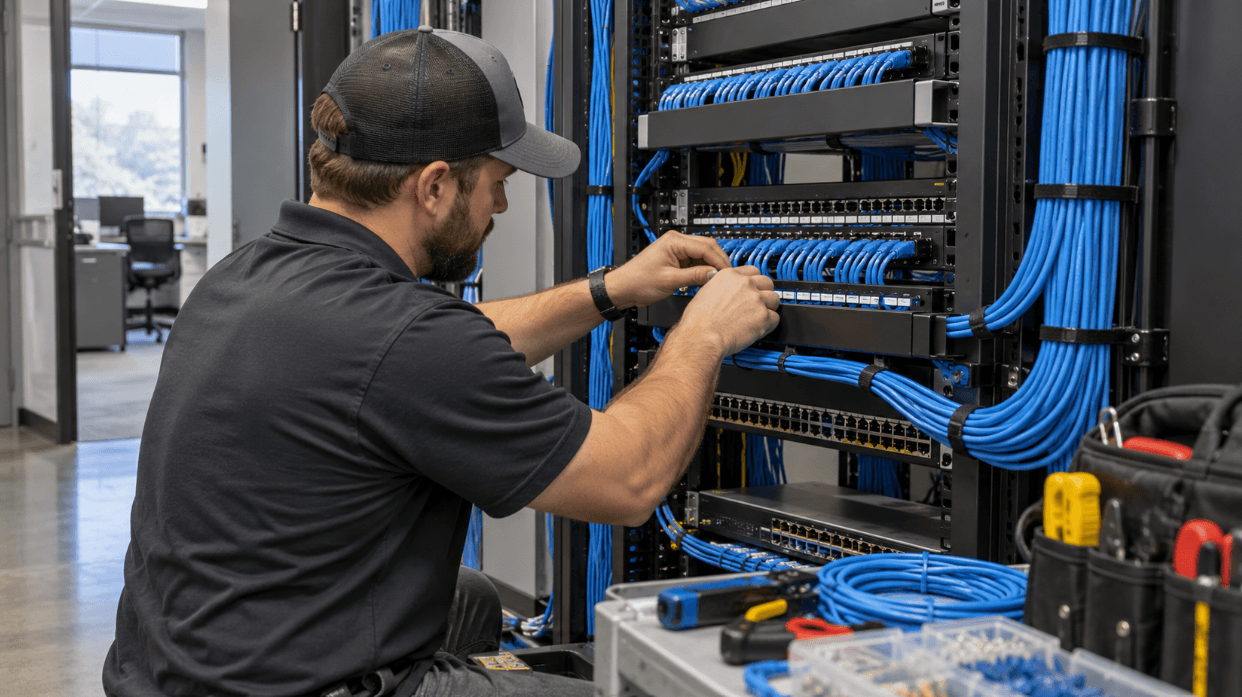
Structured cabling is a more organized approach to low-voltage wiring. Instead of installing cables one at a time without a long-term plan, structured cabling creates a cleaner system that can support current and future technology needs.
This may include organized data drops, labeled cables, patch panels, network racks, and a layout that facilitates future upgrades.
Signs Your Business Needs Better Low-Voltage Cabling
Your business may need new or improved cabling if you notice:
- Slow or unreliable internet connections
- Wi-Fi dead zones
- Security cameras dropping offline
- Messy cables around network equipment
- Unlabeled or confusing wiring
- Frequent troubleshooting issues
- Old cabling from a previous tenant
- Plans to add cameras, workstations, or access points
- Moving into a new office or commercial space
- Renovating or expanding your current location
Many businesses do not think about cabling until something stops working. However, addressing cabling before problems grow can help prevent downtime and make future upgrades easier.
Low-Voltage Cabling vs. Electrical Wiring
Low-voltage cabling and electrical wiring are not the same.
Electrical wiring delivers power to outlets, lighting, appliances, and other high-voltage systems. Low-voltage cabling is used for data, communication, video, and network connections.
Here is a simple comparison:
| Feature | Low-Voltage Cabling | Electrical Wiring |
| Main purpose | Data, video, communication, networking | Power delivery |
| Common uses | Internet, cameras, Wi-Fi, phones | Lights, outlets, electrical equipment |
| Business impact | Supports technology systems | Supports power systems |
| Examples | Network cables, camera cables, access point cabling | Outlet wiring, lighting circuits |

For many business projects, both electrical and low-voltage planning may be needed. However, low-voltage cabling should be handled with technology performance, device placement, and long-term network needs in mind.
Who Needs Low-Voltage Cabling?
Low-voltage cabling is useful for both businesses and homes, but it is especially important in commercial and industrial environments.
Common examples include:
- Offices
- Warehouses
- Retail stores
- Restaurants
- Medical offices
- Schools
- Churches
- Industrial facilities
- Multi-tenant buildings
- Home offices
- Residential properties with cameras or advanced networking needs
Any property that needs reliable internet, Wi-Fi, security cameras, or connected devices can benefit from well-planned low-voltage cabling.
Low-Voltage Cabling in Akron, OH
If you are looking for low-voltage cabling in Akron, OH, it helps to choose a provider that understands both cabling and the technology it connects to. A good cabling setup should support your network, Wi-Fi, security cameras, and future upgrades.
UnlimitComp serves Akron, OH, and the surrounding area within a two-hour radius. Whether you are setting up a business network, improving Wi-Fi coverage, installing cameras, organizing a network rack, or preparing a space for future technology needs, professional cabling can help create a stronger foundation.
FAQs About Low-Voltage Cabling
What is low-voltage cabling used for?
Low-voltage cabling is used for technology and communication systems, such as internet, data networks, Wi-Fi access points, security cameras, phones, and other connected devices.
Is low-voltage cabling only for businesses?
No. Low-voltage cabling can be used in both businesses and homes. However, businesses often need more planning because they may have more users, devices, cameras, access points, and network equipment.
Why is low-voltage cabling important for Wi-Fi?
Wi-Fi access points often need wired connections to perform well. Proper cabling allows access points to be placed where they are needed most, improving coverage and reducing dead zones.
Can low-voltage cabling improve the performance of security cameras?
Yes. Security cameras need reliable connections to send video and stay online. Proper cabling can help reduce connection issues and support a more dependable camera system.
What is structured cabling?
Structured cabling is an organized system designed to support networks, phones, cameras, Wi-Fi, and other technologies. It usually includes labeled cables, patch panels, network racks, and a planned layout.
How do I know if my business needs new cabling?
You may need new cabling if your internet is unreliable, cameras disconnect, Wi-Fi coverage is weak, cables are messy or unlabeled, or your business is adding new technology.
Can low-voltage cabling support future upgrades?
Yes. A well-planned cabling system can make it easier to add workstations, cameras, access points, or other devices later.
Who should I contact for low-voltage cabling in Akron, OH?
Contact UnlimitComp for a low-voltage cabling quote in Akron, OH, and the surrounding area. The team can help with cabling, networking, Wi-Fi, cameras, and related technology needs.
Contact UnlimitComp for a Low-Voltage Cabling Quote
Need reliable cabling for your business or home? Contact UnlimitComp for a low-voltage cabling quote in Akron, OH, and the surrounding area. Whether you need data cabling, network cabling, camera cabling, Wi-Fi access point cabling, or a more organized, structured cabling setup, UnlimitComp can help you build a stronger foundation.




Stay Connected
Subscribe for technology tips, service updates, and security insights.